Trending

Walk through downtown Dale on a Saturday morning and you can see the shape of the problem. The parking spaces in front of the bakery fill up, then empty. People come in for one errand, get back in their cars, and drive home. Nothing pulls them to stay, and nothing pulls them back after dinner.
A fenced dog park within a few blocks of Main Street would change that rhythm. Not because dogs spend money, but because their people do — twice a day, most days, in every kind of weather, for years. Dog owners are about as reliable a repeat customer as a downtown can ask for, and right now we are sending them to a gravel lot on the highway or to the next town over.
This is not a proposal for a stadium, a splash pad, or a building with staff and a budget line for paper towels. A workable downtown dog park is a quarter acre or less, and most of what makes it good is cheap.
That list is a volunteer weekend plus a fence contractor. It is not a decade-long capital project.
People rarely drive somewhere just to stand in a field. They come for the dog park and then they buy coffee, pick up a prescription, drop into the hardware store, or meet a friend for lunch because they are already out. The pattern is predictable in a way that's useful to a small downtown: a morning crowd, a late-afternoon crowd, and a busy hour after dinner in the summer.
There's a second effect that's harder to measure but easy to feel. A park full of leashed dogs and their owners makes a street look alive. Empty sidewalks read as "nothing here." Sidewalks with people on them read as somewhere worth stopping. If you want proof, count how many storefronts near a busy dog park put out a water bowl. It's a cheap way for a business to say we're part of this.
Right now, Dale's dog owners improvise. That means off-leash dogs in the school field, dogs tied to parking meters while someone runs in for two minutes, and leashed dogs getting tangled on narrow sidewalks. None of that is malicious. It's what happens when there's nowhere legal and obvious to go.
A fenced park concentrates the chaos in one place, where it can be managed. It also gives older residents a bench, a routine, and a reason to walk a few blocks — which matters more than we usually admit.
Nobody is asking the town to build a clubhouse. We are asking for a fence, a spigot, a bench, and a rule sign — and a reason to walk downtown after dinner.
One caution worth stating plainly: dog parks aren't right for every dog. Puppies who haven't finished their vaccine series, dogs recovering from illness, and dogs who are anxious or reactive around crowds are usually better served by a quiet leashed walk. Talk to your veterinarian about what's appropriate for your dog before you make it a daily habit.
Four spots are worth a serious look. Each has a trade-off.
Midday shade. Water access. Parking that doesn't take spaces from businesses. A buffer of at least a house or two from the nearest bedroom window. Visibility from the street, so the park isn't a hiding place after dark. And a restroom or a portable toilet within a short walk, because people stay longer when they can.
Noise. Dogs bark. A park gathers the barking into one place instead of scattering it across sidewalks, yards, and the school field.
Cost. Fair question, and it deserves a real number rather than a slogan. Compare it to what the town already spends maintaining land nobody visits, and let the council decide.
Liability and insurance. Towns already own parks, and they already carry coverage for them. Ask the town's attorney and insurer directly — and if you're organizing anything formal, get your own professional advice rather than relying on a neighbor's recollection.
Who cleans up. Users do, with a posted roster and a trash can on the existing route. Parks with visible rules and visible volunteers stay clean.
The fastest way to kill this idea is to ask for everything at once. The fastest way to build it is to ask for something small and specific, then show up.
Here's what you can do this month. Count foot traffic on Main Street for one Saturday morning and one weekday evening, and write the numbers down. Talk to the three businesses closest to your preferred site and ask what they think. Show up at the next council meeting and ask that a downtown dog park be studied. Volunteer to lead the pilot if they'll let you.
Dale doesn't need a grand plan. It needs a fence and a few people willing to unlock the gate in the morning. Everything else tends to follow.
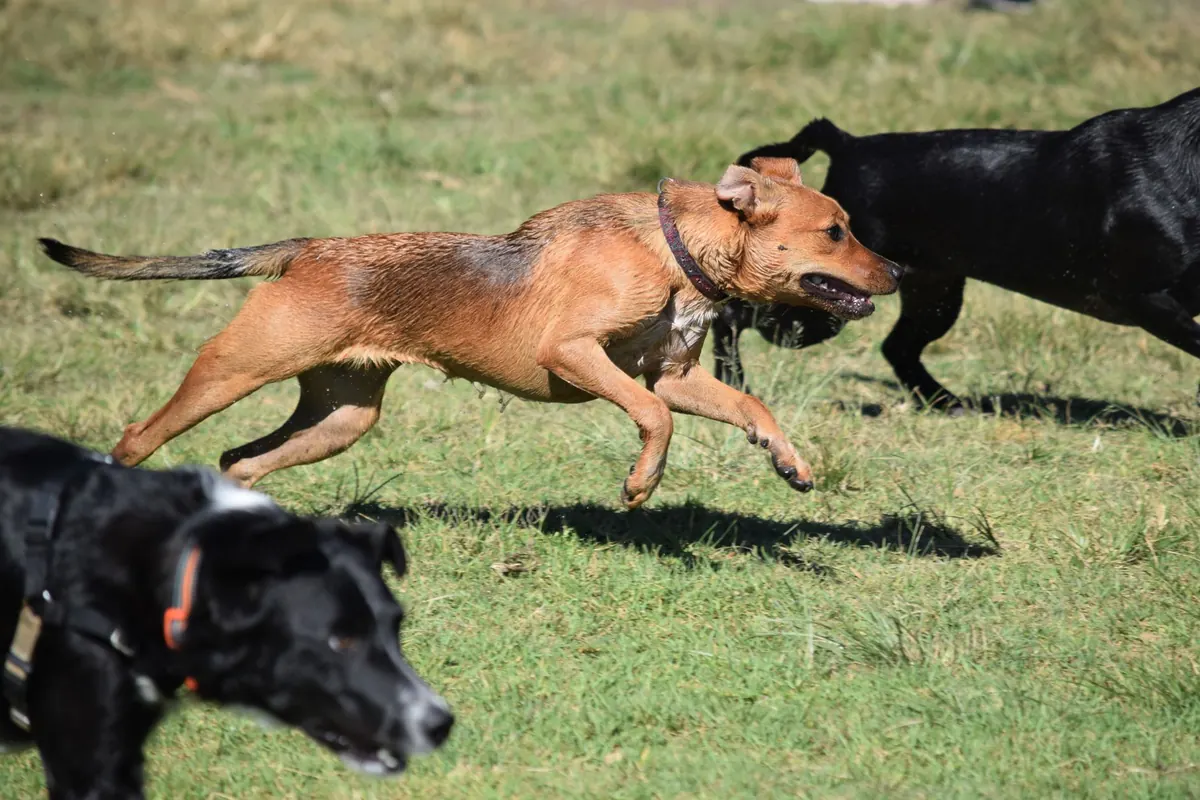
Photo: Gili Pup / Pexels